Chargement...
Chargement...
Des carreaux muraux de 14mm aux dalles structurelles de 100mm — comment specifier la bonne epaisseur.
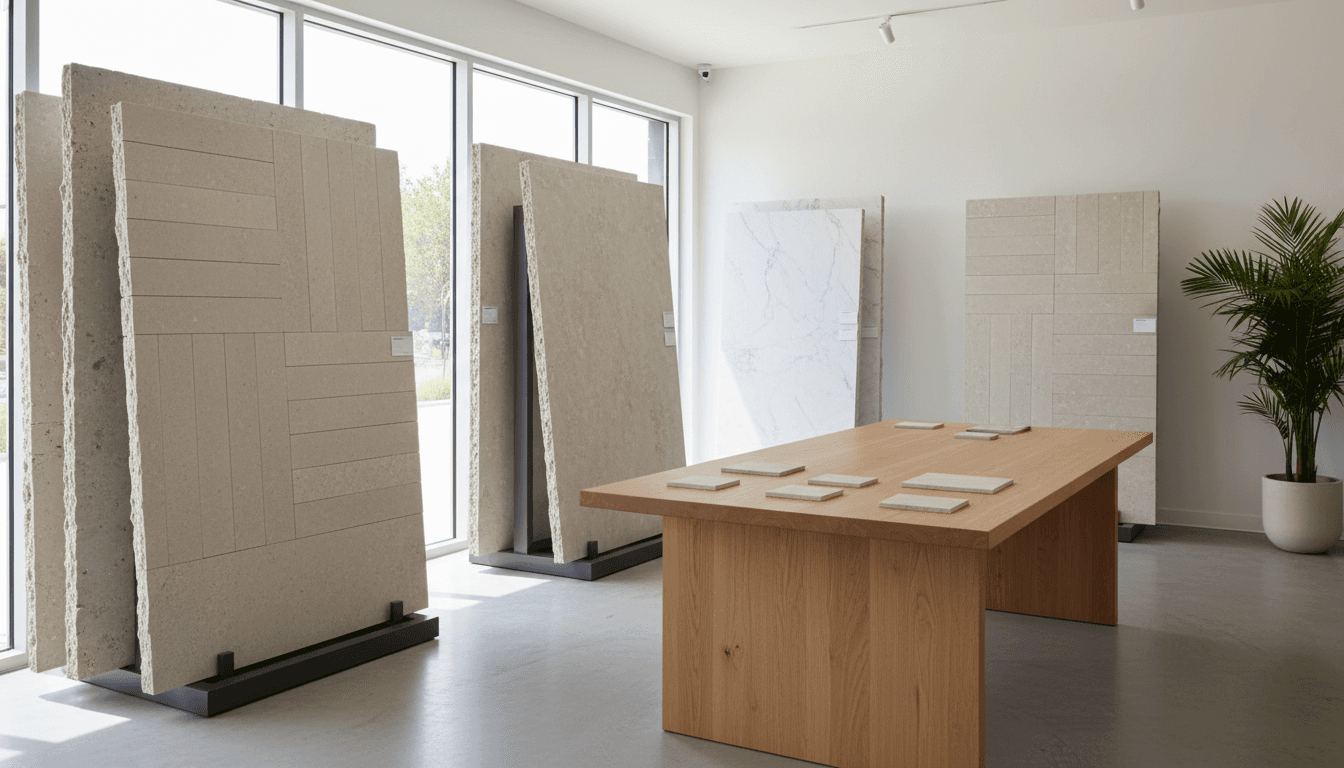
Stone thickness directly impacts structural integrity, weight load, and installation method. Our range spans from 14mm (decorative wall tiles) to 100mm (structural elements and heavy-traffic commercial floors).
For residential floors: 19-20mm is standard. This provides sufficient strength for normal foot traffic while keeping weight manageable. Commercial floors typically require 28-30mm for durability under rolling loads.
Wall cladding can use thinner material — 14-15mm for interior feature walls, 19-20mm for exterior facades. Mechanical fixing is required above 2m height regardless of thickness.
Countertops and vanity tops use 28-30mm for a substantial edge profile. For the popular 'raw edge' look, 30mm provides enough material for the irregular split-face edge detail.
Weight calculation: width(cm) × length(cm) / 10000 × thickness(cm) / 100 × density kg/m³. Density varies by stone type — our Moroccan limestone (Atlas Beige, Atlas Grey) is ~2,450 kg/m³ (ASTM C97); marble is ~2,700 kg/m³. Example for Atlas Beige Castle 60×60cm at 2cm: 0.36 m² × 0.02 m × 2,450 = 17.6 kg per tile. This matters for structural engineering (slab loading), shipping logistics (container weight capacity), and fragile substrate planning.